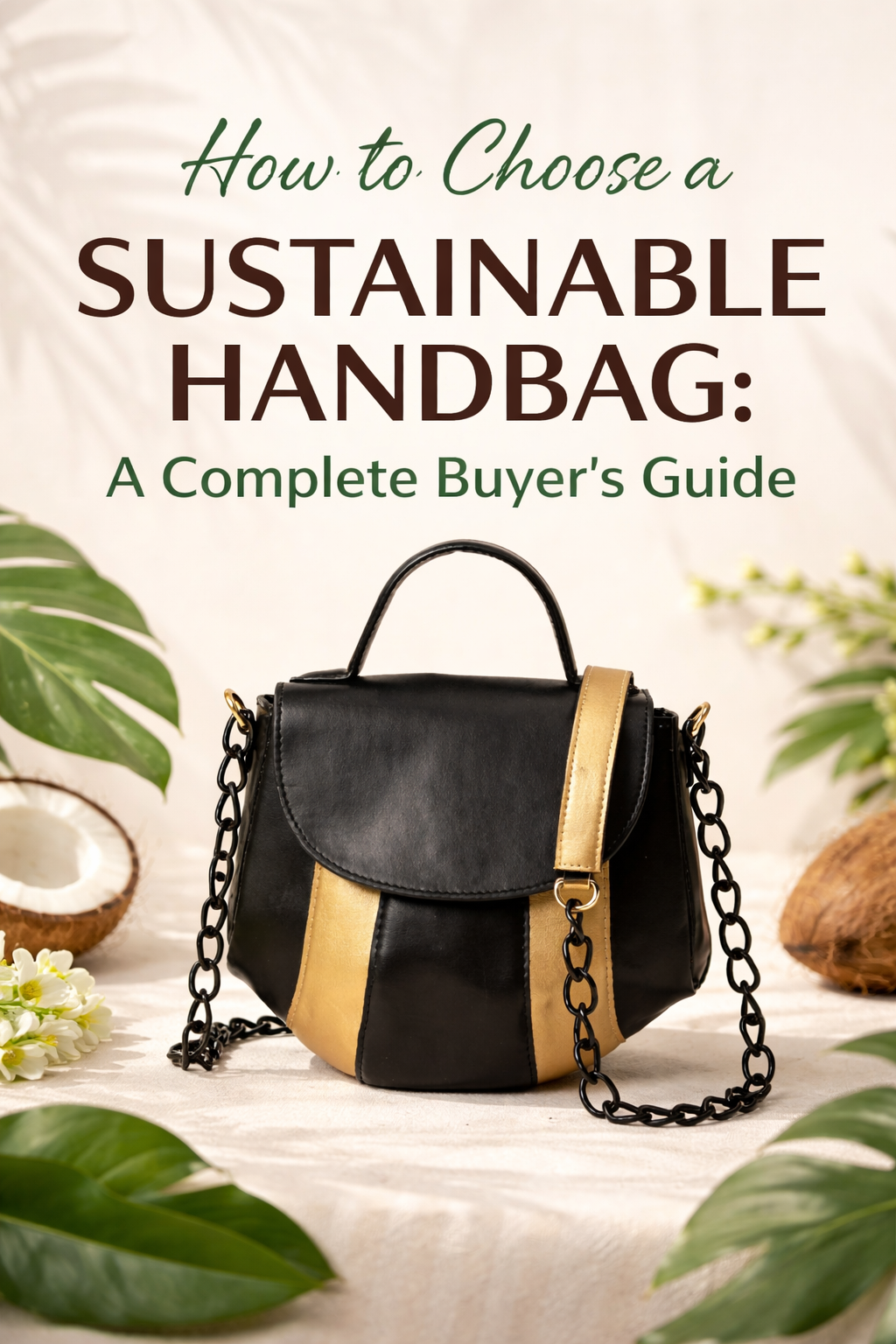
How to Choose a Sustainable Handbag: A Complete Buyer’s Guide
Choosing a sustainable handbag today is not as simple as it seems.
With terms like “vegan leather,” “eco-friendly,” and “ethical fashion” used widely, it can be difficult to understand what truly makes a handbag sustainable.
This guide breaks down the key factors you should consider before making a purchase — helping you move beyond marketing and make a conscious, informed decision.
1. Understand the Material
The material is the foundation of any sustainable handbag.
Not all alternatives to leather are equal. Many so-called “vegan leather” products are plastic-based (PU or PVC), which are not environmentally responsible.
Instead, look for plant-based materials such as:
• Banana leather
• Apple leather
• Cactus leather
• Coconut leather
• Cork
• Hemp
These materials are derived from natural or agricultural waste sources and represent a shift toward more responsible design.
👉 To understand this better, read:
What Is Plant Leather? A Complete Guide to Cactus, Apple, Banana & Coconut Leather
2. Look Beyond “Vegan Leather”
“Vegan” only means the product does not use animal leather.
It does not automatically mean the material is sustainable.
A plastic-based handbag can still be vegan — but not eco-friendly.
The real question to ask is:
What is this material made from?
👉 Read more:
Are Vegan Leather Bags Sustainable? The Truth About Vegan Leather
3. Evaluate Durability
Sustainability is not only about materials — it is also about longevity.
A bag that lasts years is more sustainable than one that needs to be replaced frequently.
Look for:
• Structured construction
• Strong stitching
• Quality hardware
• Reinforced handles and base
👉 Learn more:
How Long Do Vegan Leather Bags Last? Durability Explained
4. Understand Craftsmanship
True sustainable luxury lies in craftsmanship.
Handcrafted products often:
• Have better quality control
• Use fewer industrial processes
• Support artisan communities
👉 Explore the process:
How Sustainable Handbags Are Made: The Craft Behind Responsible Luxury
5. Choose Functionality That Fits Your Life
A sustainable bag should also work for your lifestyle.
Consider:
• Daily essentials capacity
• Work vs travel use
• Weight and comfort
• Organisation and compartments
A well-designed bag reduces the need for multiple purchases — making it a more responsible choice.
🌱 Our Approach at Green Hermitage
At Green Hermitage, we work primarily with plant-based materials such as banana leather, while also exploring apple, cactus, coconut, cork, and hemp.
Each product is designed with a balance of:
• Material innovation
• Functional design
• Artisan craftsmanship
Explore some of our pieces:
❓ Frequently Asked Questions
1. What is the most sustainable material for handbags?
Plant-based materials like banana, apple, cactus, and cork are considered more sustainable alternatives compared to plastic-based leather.
2. Is vegan leather always sustainable?
No. Many vegan leathers are made from synthetic materials like PU or PVC. Always check the material composition.
3. How long do plant-based leather bags last?
With proper care and quality craftsmanship, plant-based leather bags can last for years.
4. Are sustainable handbags worth it?
Yes. They offer better long-term value through durability, ethical sourcing, and reduced environmental impact.
Final Thought
Sustainability is not about labels — it is about understanding.
The more informed your choices, the more meaningful your purchases become.
Choosing the right handbag is not just a style decision — it is a reflection of what you value.