


How Sustainable Handbags Are Made: The Craft Behind Responsible Luxury
Sustainable handbags represent a new chapter in modern luxury. They are not simply defined by alternative materials, but by the intention, craftsmanship, and systems behind their creation.
As conscious design gains global momentum, many ask: how are sustainable handbags actually made?
The answer lies in a carefully considered process — from initial design philosophy to material selection, ethical production, durability standards, and long-term usability. True responsible luxury is built step by step.
Design for Longevity, Not Trends
Every sustainable handbag begins long before production — at the design table.
Responsible luxury prioritises timeless silhouettes over seasonal trends. Structured forms, balanced proportions, and versatile tones ensure a handbag remains relevant for years, not months.
Longevity is one of the most powerful sustainability principles. A handbag designed for extended use significantly reduces its environmental footprint over time. In sustainable fashion, durability and elegance are inseparable.
Responsible Material Selection
Material choice shapes the environmental profile of a handbag.
Sustainable handbags are often crafted using renewable plant-based materials, agricultural by-products, and lower-impact textiles. These alternatives reduce dependence on traditional leather processing and petroleum-heavy synthetics.
However, sustainability is not defined by a single label. What matters is lifecycle impact — water use, emissions, waste generation, and long-term durability.
Responsible luxury considers materials not only for aesthetics, but for environmental integrity.
Ethical and Small-Batch Production
How a handbag is made is just as important as what it is made from.
Sustainable handbag production often follows a small-batch model. This approach reduces overproduction, excess inventory, and material waste.
Skilled artisans assemble each piece with attention to structural precision. Careful cutting techniques minimise offcuts, while quality control ensures long-term performance.
Ethical handbag manufacturing combines craftsmanship with responsibility — creating products that reflect both human skill and environmental awareness.
Durability as a Sustainability Standard
A truly sustainable handbag must withstand years of use.
Reinforced stitching, high-quality hardware, structured internal support, and resilient lining materials all contribute to durability. Construction standards directly influence environmental impact — the longer a product lasts, the lower its resource burden over time.
Responsible luxury does not chase disposability. It invests in structural integrity.
Thoughtful Packaging and Distribution
Sustainability extends beyond the handbag itself.
Eco-conscious brands reduce plastic use, adopt recyclable packaging, and streamline shipping materials. Lower-impact packaging complements responsible production practices.
From workshop to wardrobe, every stage influences the environmental footprint of sustainable handbags.
Designed for Long-Term Use
Sustainable handbags are created with enduring relevance in mind.
Encouraging mindful consumption, repair culture, and long-term ownership is essential to reducing environmental strain. A well-crafted handbag should age gracefully and retain both function and aesthetic appeal.
True sustainability lives in extended use.
What Makes a Handbag Truly Sustainable?
A sustainable handbag combines:
• Responsible material sourcing
• Ethical production practices
• Durability-focused construction
• Reduced waste processes
• Timeless, long-term usability
It is not defined by a single material — but by the system behind it.
Sustainable Craft in Practice
Responsible manufacturing is not only a theory — it is reflected in finished pieces that combine craftsmanship and durability.
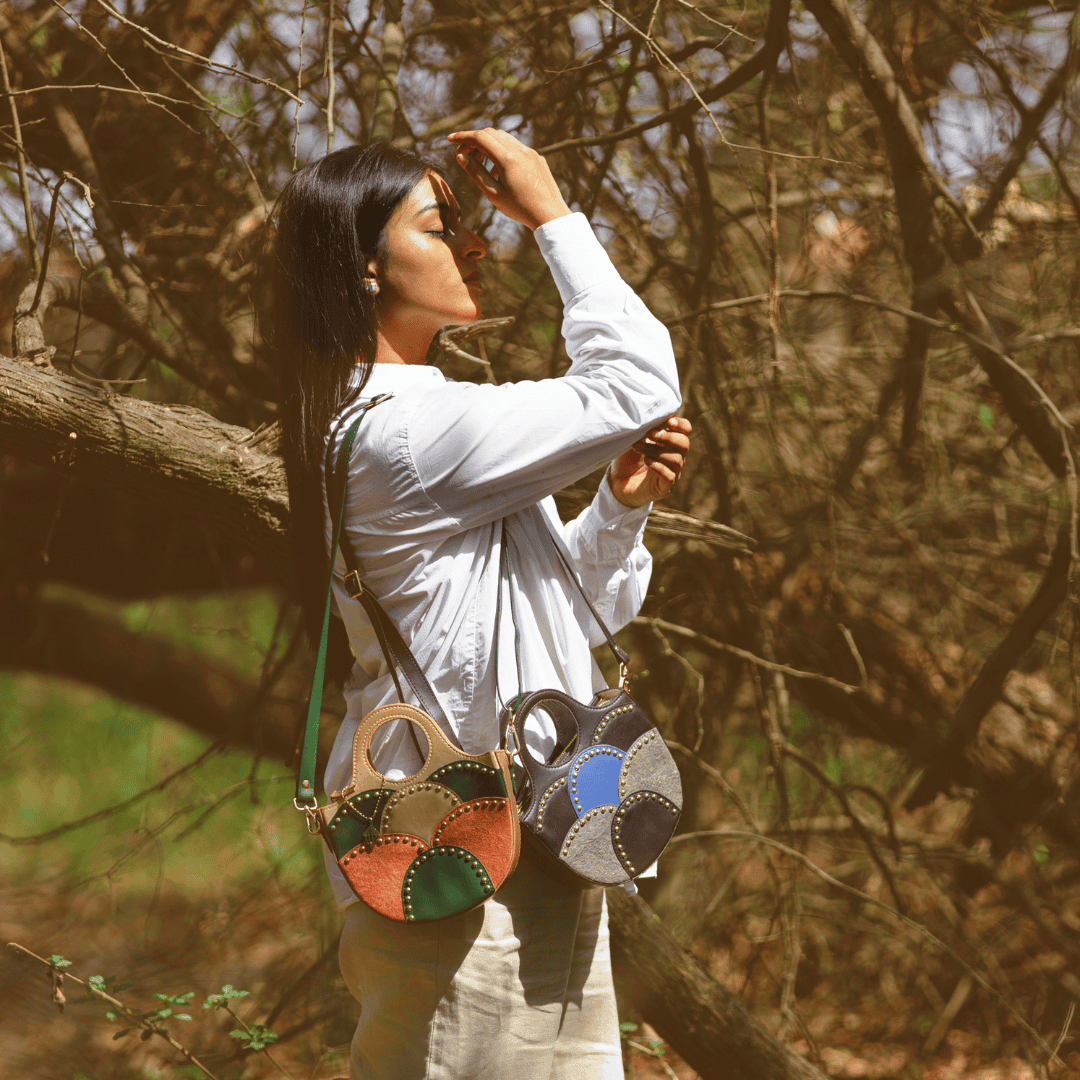
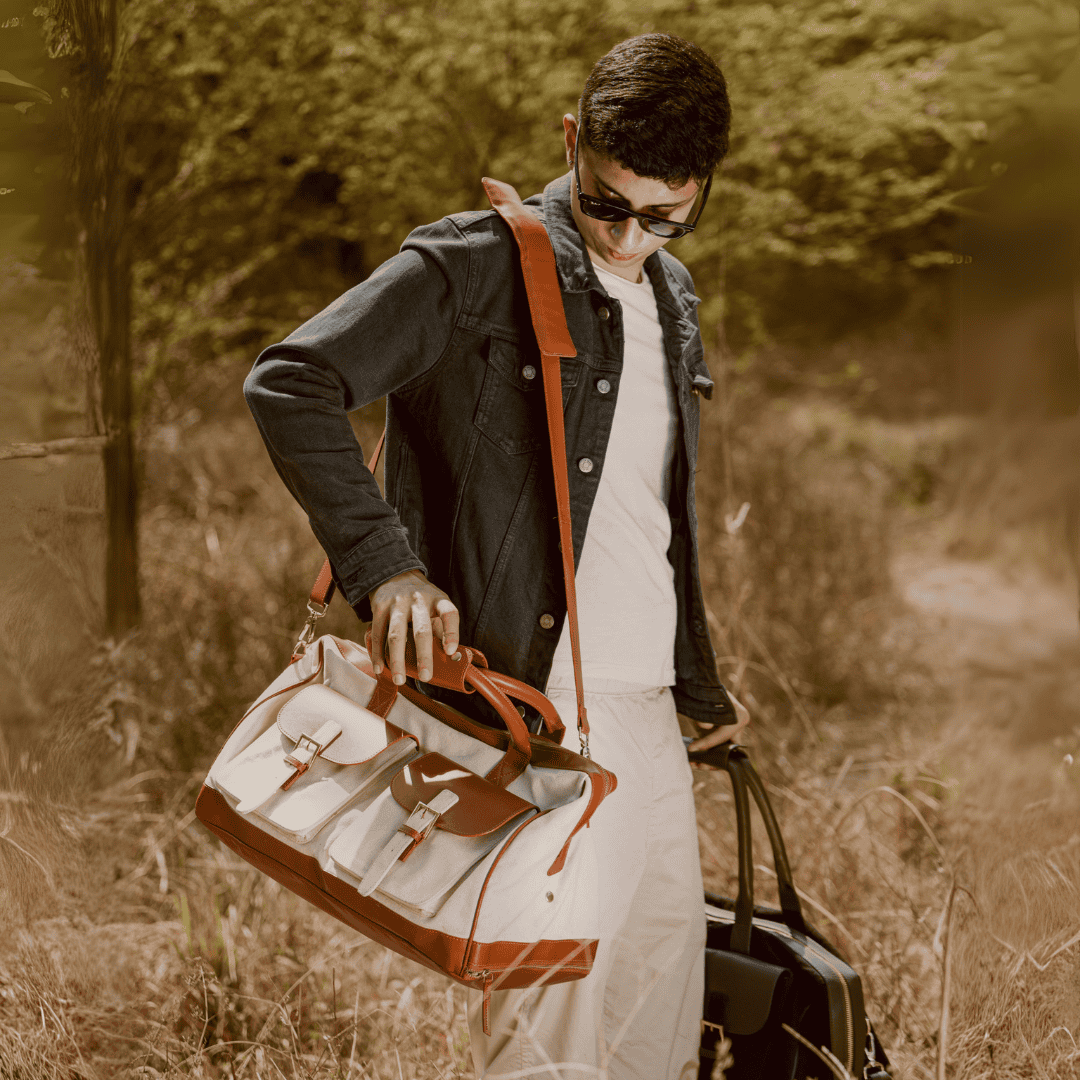
Designs such as the Aphrodite Black Embroidered Bag, the Gaia Black & Gold Shoulder Bag, and the Athena Vegan Leather Caramel Tote Bag demonstrate how structured silhouettes, refined detailing, and thoughtful material selection come together in sustainable luxury.
You can explore more handcrafted styles in the Vegan Embroidered Bags Collection, where detailed workmanship meets responsible design principles.
Final Thoughts
The future of luxury lies in responsibility.
Sustainable handbags are shaped by intentional design, ethical craftsmanship, and durability-driven construction. As global demand for eco-friendly handbags continues to grow, responsible manufacturing is redefining modern luxury.
Choosing sustainable handbags supports a shift toward thoughtful consumption and enduring value.


